METHODIST CHURCH NIGERIA: DAILY REFLECTION 2026
WHEN THE CHURCH IS UNITED: THE ECCLESIOLOGY OF POWER AND BENEVOLENCE
BIBLE PASSAGE: ACTS 2:42–47
THE SCRIPTURAL FOUNDATION: THE MODEL OF THE JERUSALEM CHURCH
“And they continued stedfastly in the apostles’ doctrine and fellowship, and in breaking of bread, and in prayers. And fear came upon every soul: and many wonders and signs were done by the apostles. And all that believed were together, and had all things common; And sold their possessions and goods, and parted them to all men, as every man had need. And they, continuing daily with one accord in the temple, and breaking bread from house to house, did eat their meat with gladness and singleness of heart, Praising God, and having favour with all the people. And the Lord added to the church daily such as should be saved.” — ACTS 2:42–47
I. THE ANATOMY OF A TRANSFORMED COMMUNITY
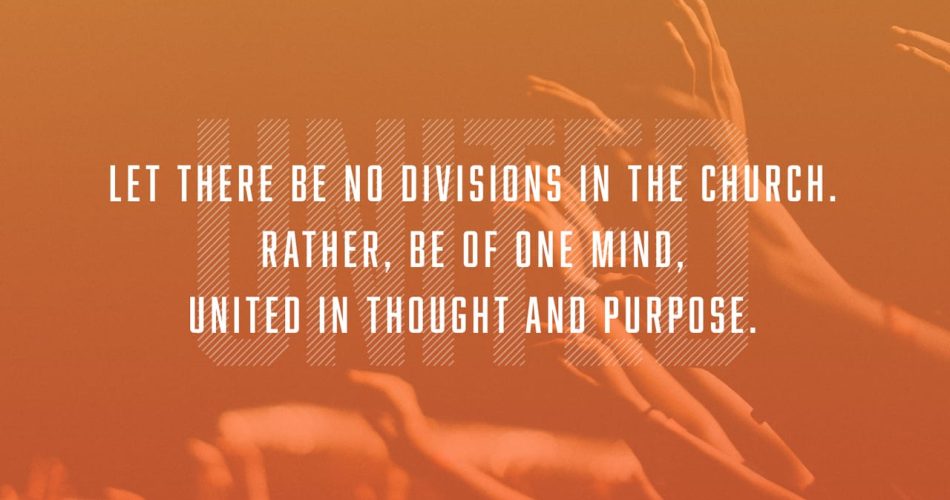
As we journey through the month of April in this year 2026, the Holy Spirit beckons the Methodist Church Nigeria—and the global Body of Christ—to return to the “Original Blueprint.” In our passage today, we find the post-Pentecost community not just surviving, but thriving in a state of organic unity. This was not a unity of convenience, but a unity of conviction.
The early church was forged in the fire of the Holy Spirit. Following the spectacular events of Pentecost, where 3,000 souls were added in a single day, the challenge shifted from evangelism to ecclesiology—how to live as a distinct, holy, and united community in a hostile world. The result was a tangible reality that impacted the spiritual, social, and economic structures of their time.
1. The Four Pillars of Spiritual Stability
The 42nd verse provides the constitutional framework of the first-century church. They did not merely “practice” these things occasionally; they “continued steadfastly” in them:
The Apostles’ Doctrine: Unity begins with a shared truth. They committed themselves to the teachings of Jesus as transmitted through the Apostles. This fulfilled the Great Commission in Matthew 28:20, ensuring that the church was built on the rock of revelation rather than the shifting sands of human opinion.
Fellowship (Koinonia): This was more than a social gathering. Koinonia implies a deep, sacrificial partnership. It is the communal sharing of life, burdens, and joys.
Breaking of Bread: This refers to both the communal meals and the observance of the Holy Communion. As commanded in Matthew 26:26, this act served as a constant reminder of the New Covenant and the sacrifice that made their unity possible.
Prayers: They recognized that unity is a spiritual gift that must be maintained through spiritual warfare. They utilized the keys of the Kingdom (Matthew 7:7; Mark 11:22–23) to keep heaven open over their community.
II. THE SOCIO-ECONOMIC IMPACT OF UNITY
In the early church, unity was not an abstract theological concept; it was a radical economic system. Acts 2:44-45 reveals a community where “all that believed were together, and had all things common.”
1. The Abolition of Lack
This was not forced communism; it was voluntary benevolence. Deeply moved by the love of Christ, wealthy believers sold their possessions to ensure that “every man had need.” Statistics from biblical sociology suggest that the early Jerusalem church was comprised of approximately 5,000 men (plus women and children) shortly after this period. To manage the logistics of feeding and supporting such a vast, diverse group—many of whom were pilgrims who had stayed in Jerusalem following Pentecost—required a level of administrative unity that remains a miracle in itself.
2. The Statistics of Growth
The result of this internal unity was external favor. Verse 47 tells us that they had “favor with all the people.” The church was growing at an exponential rate. When we look at the data of the early church, we see that it grew by an estimated 40% per decade during its first few centuries. This was not achieved through marketing, but through the undeniable power of a united front. In 2026, we must realize that a divided church is an invisible church. Only a united church can demand the attention of a fractured world.
III. BREAKING THE TRIBAL AND CLASS BARRIERS
The message for the Methodist Church Nigeria today is particularly sharp. Nigeria is a nation blessed with over 250 ethnic groups, yet this diversity is often exploited as a tool of division. In the Jerusalem church, there were Medes, Elamites, and residents of Mesopotamia—people with different linguistic and cultural backgrounds—yet they were “of one accord.”
1. Beyond Tribalism
Whether you are Igbo, Yoruba, Hausa, Fulani, Calabari, or Gwari, you must recognize that in Christ, the “middle wall of partition” has been broken down. Tribalism is a form of spiritual immaturity that denies the sufficiency of the Cross. When we prioritize our ethnic identity over our Christian identity, we grieve the Holy Spirit and hinder the “wonders and signs” mentioned in verse 43.
2. Beyond Classism
The early church saw the master and the slave eating at the same table. In 2026, the church must resist the urge to segregate based on social status or economic power. Statistics show that societies with high income inequality often experience more social unrest. The Church is called to be the “Great Equalizer,” where the billionaire and the peasant find common ground in the “singleness of heart” described in verse 46.
IV. THE CATALYST FOR MIRACLES
Verse 43 notes that “fear [awe] came upon every soul: and many wonders and signs were done by the apostles.” There is a direct correlation between Unity and Authority.
When the church is in one accord:
-
The atmosphere becomes conducive for the miraculous.
-
The “fear of God” returns to the community, curbing corruption and immorality.
-
The presence of God becomes palpable, fulfilling the promise of Matthew 18:20: “For where two or three gather in my name, there am I among them.”
Unity is the “anointing oil” that flows from the head (Christ) down to the skirts of the garment (the members). Without unity, the oil stops flowing.
V. REFLECTION AND APPLICATION: THE 2026 MANDATE
As we reflect on John Milton’s classic hymn, “Let us with a gladsome mind,” we are reminded that God’s mercy and faithfulness are the foundation of our joy. But joy is maximized in community.
How can we experience this unity today?
1: Acknowledge our Interdependence: We must stop acting like spiritual islands. We need the support, the prayers, and the correction of the brethren.
2: Sacrificial Giving: Look around your local Methodist circuit. Is there a brother or sister in need while you have abundance? Unity begins with the opening of our wallets.
3: Daily Fellowship: We must move beyond “Sunday-only” Christianity. The early church met “daily.” In our modern context, this means utilizing technology and small groups to maintain a constant “breaking of bread from house to house.”
MEMORY VERSE
Matthew 18:20: “For where two or three gather in my name, there am I among them.”
HYMN: MHB 18 — LET US WITH A GLADSOME MIND
-
LET us with a gladsome mind,
Praise the Lord, for He is kind:
For His mercies aye endure,
Ever faithful, ever sure.
-
Let us blaze His name abroad,
For of gods He is the God:
-
He, with all-commanding might,
Filled the new-made world with light:
-
All things living He doth feed,
His full hand supplies their need:
-
He His chosen race did bless
In the wasteful wilderness:
-
Let us then with gladsome mind,
Praise the Lord, for He is kind:
PRAYER
Lord Jesus, the Great Shepherd of the Sheep, we thank You for the model of the early church. We repent of our tribalism, our classism, and our selfishness. Help me to be an active part of a community of believers who are united in their love for You and for each other. Give me the strength and courage to support others, to pray for others, and to share my resources with others. Let Your Church in Nigeria be a beacon of light and a testimony of unity to the nations, in Jesus’ Name. Amen.
BIBLE READING PLAN
-
DAY: Psalm 73, 77
-
NIGHT: Psalm 78
DAILY CONFESSION:
I am a member of the Body of Christ. I refuse to entertain division or tribal sentiment. I am united with my brothers and sisters in doctrine, fellowship, and prayer. As we walk in one accord, the Lord is adding to our number daily such as should be saved. Amen!