SATURDAY, SEPTEMBER 6, 2025
An In-Depth Examination of Character, Consecration, and the Dangers of Compromise
BIBLICAL FOUNDATION:
- TEXT: Judges 13:1-25; 14:1-20; 15:1-20; 16:1-31
- MEMORY VERSE: “For, lo, thou shalt conceive, and bear a son; and no razor shall come on his head: for the child shall be a Nazarite unto God from the womb: and he shall begin to deliver Israel out of the hand of the Philistines.” (Judges 13:5, KJV)
MESSAGE: THE RISE AND FALL OF SAMSON
The story of Samson is one of the most compelling and tragic narratives in the Bible. It is a powerful account of immense potential, divine favor, and the catastrophic consequences of spiritual compromise. His life serves as a profound lesson for every believer, particularly the youth, on the critical importance of character, obedience, and maintaining a consecrated life.
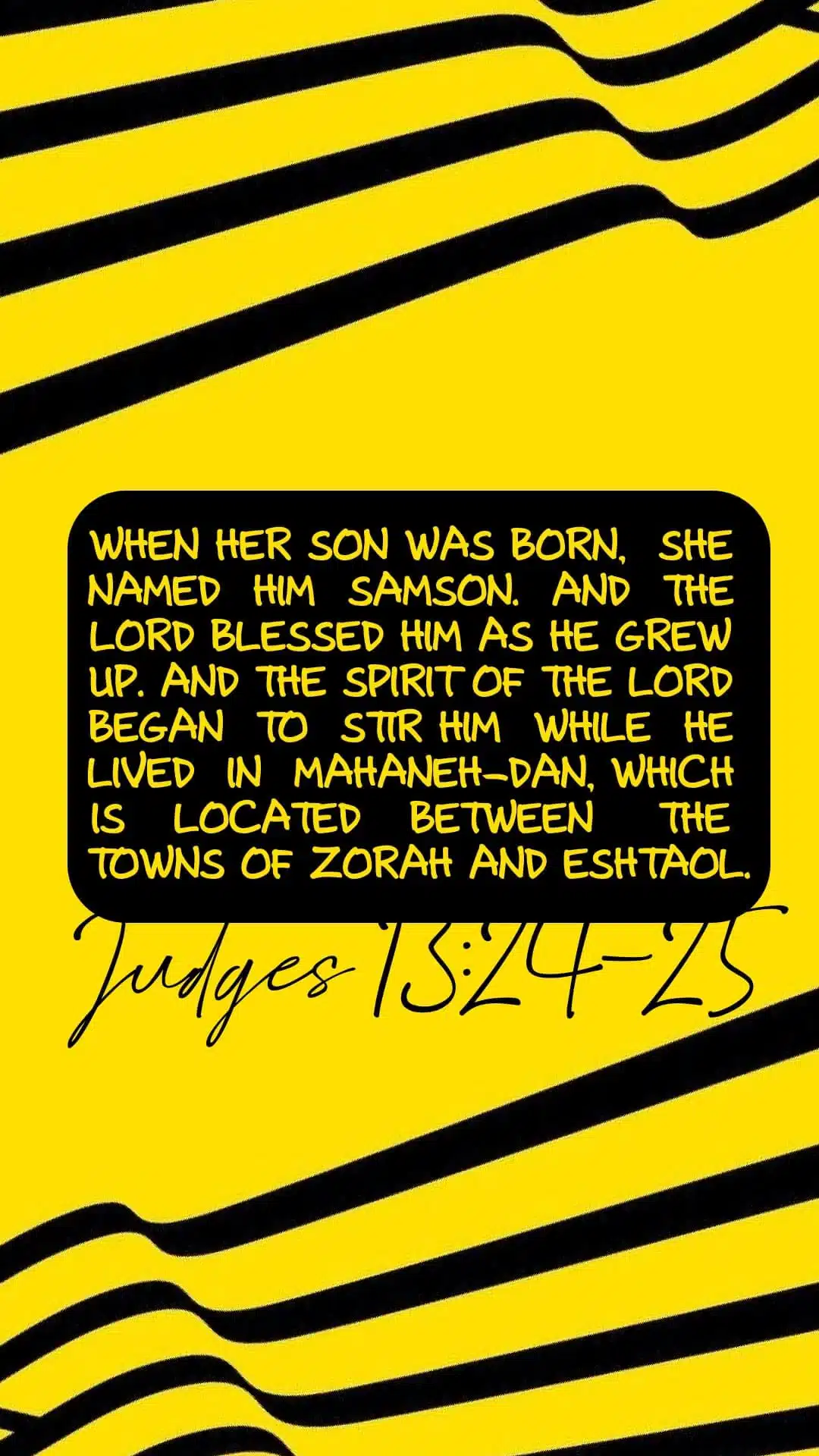
The narrative begins with a familiar challenge: the family of Manoah was barren. In a time when the children of Israel had once again backslid and were in the hands of their oppressors, the Philistines, God intervened with a miraculous promise. An angel of the Lord appeared to Manoah’s wife and announced that she would conceive and bear a son who would be a Nazarite from birth. This child, Samson, was destined to begin the deliverance of Israel from the Philistines. This divine promise came with specific instructions regarding the child’s lifestyle—he was not to cut his hair, drink strong drink, or eat anything unclean. This was a direct fulfillment of God’s promise to His people, a reminder that He specializes in changing negative situations into positive ones. Our faith in Him and His Word is the bridge that connects us with His unchanging power.
Manoah and his wife, as people of faith, responded with prayer and a sacrificial offering. They sought confirmation and were ready to obey God’s detailed instructions. This is a powerful lesson for us today: when God reveals His will, our response should be to seek clarity and to offer our lives in humble obedience.
The Dangers of an Unequal Yoke
The tragedy of Samson’s life began with a seemingly small act of disobedience. As a young man, he went to Timnath and saw a woman of the Philistines whom he wanted to marry. This was in direct contradiction to God’s command to the Israelites not to intermarry with the inhabitants of the land (Deuteronomy 7:3). His parents, understanding the divine standard, advised him against it, but Samson’s response revealed a deep-seated spiritual immaturity: “Get her for me; for she pleases me well.” (Judges 14:3). He chose personal desire over divine counsel.
This act of disobedience set off a chain of catastrophic events. Samson’s unholy relationship with an unbeliever contradicted God’s standard and brought him immediate problems. When he returned to Timnath for the wedding, he killed a young lion. Later, he used this event to propose a riddle at his wedding feast, a riddle that, when solved through his wife’s betrayal, led to a cycle of violence and revenge. This conflict culminated in the death of his wife and father-in-law at the hands of their own people. This would have all been avoided if Samson had simply obeyed his parents and God’s command.
This is a powerful warning to Christian youths today. When a believer enters into an unequal yoke in marriage or business, it can lead to spiritual and emotional distress. Samson, a man divinely ordained to deliver Israel, was instead distracted by personal lust and desires, which led to pain and destruction. His life demonstrates that our choices, especially in relationships, have far-reaching consequences.
The Call to Purposeful Prayer
Despite his early failures, Samson’s story also highlights the power of prayer. When Manoah heard about the angel’s visit, he didn’t just accept the news; he prayed for confirmation and guidance on how to raise the child. God heard his prayer and sent the angel again. This shows us that purposeful and persevering prayer is the solution to all our problems. Christian youths must develop the habit of praying in all circumstances of life.
What are the steps to effective praying?
Be a genuine child of God: Your relationship with God is the foundation of your prayer life (2 Corinthians 6:14-18).
Live a righteous life: Sin is a major barrier to answered prayer (James 5:16).
Have constant faith in God: Believe that He can and will meet your needs (Hebrews 11:6).
Know His Word: Praying according to God’s promises is praying with confidence (1 Corinthians 1:20).
Pray according to His will: We must align our desires with God’s plans for our lives (1 John 5:14-15).
Live in obedience: Obedience to God’s Word is crucial (1 John 3:21-22).
Pray in the name of Jesus Christ alone: He is the only mediator between God and man (John 14:13; Acts 4:12).
The Sanctity of Offerings and the Dangers of Lust
Samson’s life also serves as a cautionary tale about lust and its destructive power. Despite his failed marriage, Samson’s inordinate affection for Philistine women continued. He went to Gaza and saw a harlot and went in to her (Judges 16:1). His lust had taken control, leading him to commit immorality. This spiritual laxity, a lack of strictness or carefulness, was his ultimate downfall.
His final and most tragic mistake was with Delilah. His enemies, knowing his weakness for women, used her to find the secret of his strength. Despite her repeated attempts to discover his secret, Samson, blinded by lust, continuously gave in until he finally revealed the source of his Nazarite strength: his uncut hair.
This is a powerful lesson for all of us. As believers, we must never give room to the tempter. We are warned to “Abstain from all appearance of evil” (1 Thessalonians 5:22). Samson’s lust led to his downfall. He lost his strength, his sight, and his dignity. The enemy of our soul will use our weaknesses against us.
Lessons from Samson’s Final Exploits and Death
Despite his monumental failure, Samson’s story does not end in complete defeat. After his hair was shaven, he was captured, had his eyes gouged out, and was forced to grind in the prison. He became a spectacle for his enemies. However, a glimmer of hope appeared: “Howbeit the hair of his head began to grow again after he was shaven.” (Judges 16:22). This was a symbol of God’s mercy and Samson’s renewed consecration.
In his final moments, Samson prayed a heartfelt prayer, repenting of his folly and asking God for strength one last time. God, who is gracious and merciful, hearkened to his prayer. Samson’s final act, pulling down the pillars of the temple and killing more of his enemies in death than in his life, was a testament to God’s restorative power.
From Samson’s life and death, Christian youths can learn several vital lessons:
- Be Prone to Temptation: Every believer, regardless of their spiritual standing, is prone to temptation. We must always ask for God’s grace to overcome (Matthew 26:41).
- The Enemy’s Strategy: The higher and stronger you are spiritually, the more intense the temptations will be (John 16:1-3).
- Abstain from Evil: Never give room to the tempter, no matter who he or she is. Flee from the very appearance of evil (Proverbs 1:10; 1 Thessalonians 5:22).
- Immediate Repentance: If you go back or do anything displeasing to God, immediately repent and consecrate your life back to Him.
- Look Forward to Restoration: If you are restored, do not dwell on past sins. Forge ahead and look forward to the blessings of restoration.
- Full Consecration: Every genuine child of God is expected to fully consecrate their lives to the Lord and be willing to do all it takes to please Him (Acts 20:24).
- God’s Enablement: God enables the forgiven to do exploits beyond their imagination (Daniel 11:32).
Samson’s story is a powerful reminder that our strength is not in our own abilities but in our unwavering obedience and consecration to God. It is a call to guard our hearts against lust, to listen to divine counsel, and to always prioritize God’s will above our own desires.
PRAYER
- Heavenly Father, I thank You for the life of Samson and the lessons I have learned. I pray for the grace to overcome every temptation and to maintain a life of consecration to You. I pray that my life will be a testament to Your power and that I will never compromise my faith for worldly desires. In Jesus’ name, Amen.
FAQ (Frequently Asked Questions)
Q1: What does it mean to be a Nazarite?
A: A Nazarite was a person in ancient Israel who took a special vow of consecration to God. The vow included abstaining from wine and strong drink, not cutting their hair, and avoiding contact with dead bodies. The uncut hair was a visible sign of their consecration and the strength that came from it.
Q2: Was Samson’s strength in his hair?
A: No, Samson’s strength was not literally in his hair. The hair was a symbol of his consecration and obedience to God as a Nazarite. His strength came from God, and as long as he maintained his consecration, God’s Spirit worked mightily through him. When his hair was cut, he broke his vow, which symbolized his disobedience and the loss of God’s divine support.
Q3: How does Samson’s story relate to youths today?
A: Samson’s story is a timeless warning for all youths. It highlights the dangers of unequal yokes in relationships, the destructive nature of lust and inordinate affection, and the importance of parental and spiritual counsel. His life serves as a powerful reminder that our personal choices have spiritual consequences and that our strength comes from our obedience to God.
Question and Answer
Q1: What was the challenge facing Manoah’s family before the birth of Samson?
A: The challenge facing Manoah’s family was barrenness.
Q2: What was the main reason Samson’s first marriage brought him problems?
A: The main reason his marriage brought problems was that it was an unequal yoke with an unbeliever, which was against God’s command.
Q3: What was the ultimate cause of Samson’s downfall?
A: The ultimate cause of Samson’s downfall was his lust and spiritual laxity, which led him to reveal the secret of his consecration to Delilah.
Q4: What is one of the key lessons for youths from Samson’s final moments?
A: A key lesson is that God is merciful and can restore those who repent, and that even after failure, God can still use a genuinely restored person for His glory.