SATURDAY, NOVEMBER 1ST, 2025
FINDING HOPE WHEN GOD DELAYS
AUTHOR: PASTOR E. A. ADEBOYE & PASTOR (MRS) FOLU ADEBOYE
MEMORISE:
She saith unto him, Yea, Lord: I believe that thou art the Christ, the Son of God, which should come into the world.” John 11:27
BIBLE READING: JOHN 11:21-27
21 Then said Martha unto Jesus, Lord, if thou hadst been here, my brother had not died.
22 But I know, that even now, whatsoever thou wilt ask of God, God will give it thee.
23 Jesus saith unto her, Thy brother shall rise again.
24 Martha saith unto him, I know that he shall rise again in the resurrection at the last day.
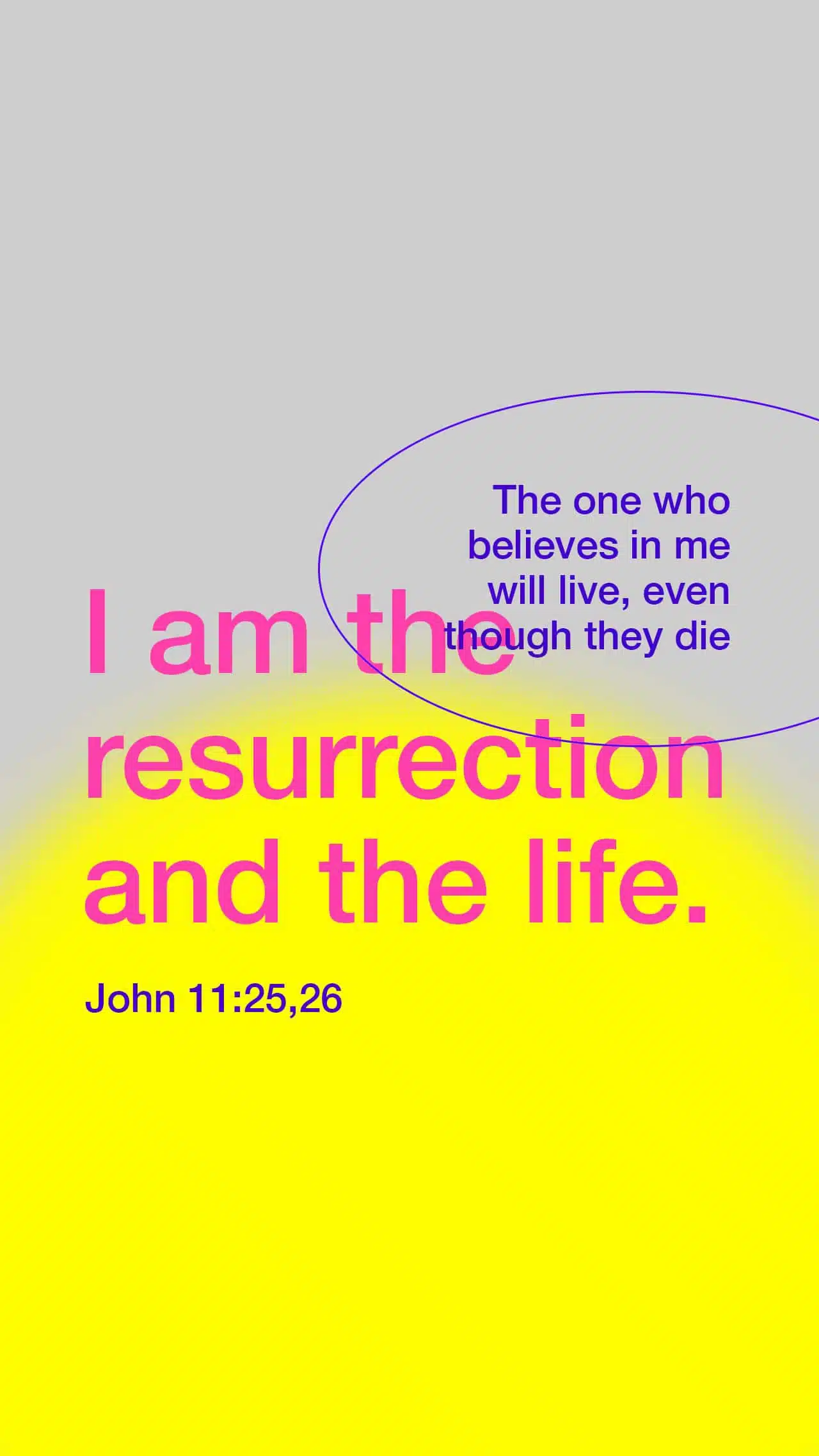
25 Jesus said unto her, I am the resurrection, and the life: he that believeth in me, though he were dead, yet shall he live:
26 And whosoever liveth and believeth in me shall never die. Believest thou this?
27 She saith unto him, Yea, Lord: I believe that thou art the Christ, the Son of God, which should come into the world.
INTRODUCTION: THE ULTIMATE CONFRONTATION
Life is a constant battle between hope and despair. We all face moments when our prayers seem to hit a ceiling, our efforts yield no fruit, and the promises of God appear to be utterly defeated by the stark, undeniable reality of the world. This confrontation is never more dramatic or painful than when we face death—the death of a loved one, the death of a dream, the death of a potential, or the death of a relationship.
The story of Lazarus in John chapter 11 is the Bible’s definitive narrative on this ultimate conflict. It is a profound study of human grief meeting divine delay, and conditional faith being elevated to absolute trust. When Lazarus, the brother of Mary and Martha, fell ill, the sisters—who were dear friends of Jesus—did the only logical thing: they sent an urgent message: “Lord, behold, he whom thou lovest is sick.”
This message was a plea for immediate intervention, a banked assurance that the Master would drop everything and rush to the bedside of His friend. But Jesus, operating on a higher, eternal clock, deliberately delayed His visit. He knew that the healing of a sick man would glorify God, but the resurrection of a dead man would reveal something far more majestic about His identity.
The moment Jesus arrived, Lazarus was not just sick; he was dead and had been buried for four days. This delay was the calculated backdrop for a greater miracle. It was Jesus positioning the situation to deliver a revelation that would forever define His mission and empower the faith of His followers: that He is the Resurrection and the Life.
This truth should be the anchor for every believer struggling with an “unpalatable situation” today.
I. THE HUMAN REALITY OF THE DELAY
To fully appreciate the miracle, we must first understand the depth of Martha’s grief and disappointment. Her initial statement to Jesus captures the emotional reality of every believer who has cried out to God and seemingly been ignored.
A. The Conditional Faith of Martha
When Jesus finally arrived in Bethany, Martha rushed out to meet Him, and her words were loaded with sorrow and a touch of understandable reproach: “Lord, if thou hadst been here, my brother had not died” (John 11:21).
This is the sound of conditional faith. It says: “I believe in your power, Lord, but only up to a certain point. I believe you could have handled the sickness (the possible), but now that it’s death (the impossible), you are too late.”
Martha’s statement is the universal language of human frustration with God’s timing.
- “Lord, if you had intervened when I first prayed, my marriage wouldn’t have collapsed.”
- “Lord, if you had given me the job six months ago, I wouldn’t be in this debt.”
- “Lord, if you had answered the doctors’ prayers, the illness wouldn’t have become chronic.”
She saw Jesus as a powerful healer (a prophet who could prevent death), but not yet as the conqueror of death itself.
B. The Residual Faith: Even Now
Despite her reproach, Martha’s faith had a defiant remnant: “But I know, that even now, whatsoever thou wilt ask of God, God will give it thee” (John 11:22).
This “even now” faith is critically important. It demonstrates that though she was grieving and confused, she still held onto two unshakeable facts:
- Jesus is a man of prayer: She saw Jesus as a powerful intercessor who could ask the Father for anything.
- God answers Jesus: She had absolute confidence in the divine connection between Jesus and the Father.
This “even now” faith is what God works with. It’s the stubborn refusal to accept the finality of the diagnosis. It is the spiritual grit that says, “It’s bad, it’s late, but God is still God, and He still has power over this situation.” Our challenge is to ensure that even when circumstances seem to defy our prayers, we do not stop praying and we do not lose that residual “even now” hope.
II. THE DIVINE REVELATION: JESUS’ COUNTER-STATEMENT
Jesus did not correct Martha’s theology immediately; He corrected her perspective. He first offered her the general comfort of resurrection: “Jesus saith unto her, Thy brother shall rise again” (John 11:23).
A. The Limits of General Belief
Martha’s response to this was accurate, yet limited: “I know that he shall rise again in the resurrection at the last day” (John 11:24).
Martha held the correct Jewish doctrine: she believed in the future, general resurrection of the righteous. This was intellectual knowledge about a future event. It was distant comfort, not immediate power.
Jesus was interested in shifting her faith from a future theological concept to a present, personal reality.
B. The Authority of the “I AM” Declaration
At this pivotal moment, Jesus delivered one of the seven great “I AM” statements in John’s Gospel, a claim of divine, self-existent power that directly linked Him to the God of the Old Testament (Exodus 3:14):
“Jesus said unto her, I am the resurrection, and the life…” (John 11:25).
This statement is the hinge upon which all Christian hope turns. Jesus did not say:
- “I have the power of resurrection.”
- “I know the doctrine of life.”
- “I will grant resurrection later.”
He declared that He IS the Resurrection and the Life.
- I AM the Resurrection: This means Jesus is the final authority over the grave. He doesn’t merely command resurrection; He is the very force that overcomes death. When you confront a “dead” situation, you are confronting the effect, but Jesus confronts the cause—the power of death itself.
- I AM the Life: This means He is the source, sustainer, and author of all existence (Zoe – eternal, uncreated life). Everything that exists draws its being from Him.
C. The Double Promise of Eternity and Time
Flowing from this declaration, Jesus gives two promises that cover both our eternal destiny and our present reality:
- The Promise to the Dead: “…he that believeth in me, though he were dead, yet shall he live.” This is the promise of eternal life for the physically deceased believer. The spirit and soul live forever, and the body will be resurrected.
- The Promise to the Living: “And whosoever liveth and believeth in me shall never die.” This refers to spiritual death. The person living in faith and relationship with Him shall never experience eternal separation from God.
Jesus was asking Martha to grasp a radical truth: His presence is the immediate solution to death. You don’t have to wait for the last day. The power of the last day is standing right in front of you now.
III. THE CALL TO BELIEF: “BELIEVEST THOU THIS?”
After delivering the highest theological revelation, Jesus brings it down to the most personal, challenging, and essential question of the Gospel: “Believest thou this?” (John 11:26).
This is the demand for a personal confession that transcends mere academic agreement. It’s one thing to agree that Jesus is the Christ; it is another thing entirely to believe that He is the Resurrection and the Life for my dead brother, for my dead marriage, or for my dead career.
A. The Foundation of the Church
Martha’s response is the key that unlocked the miracle and is the very foundation of the Christian Church: “Yea, Lord: I believe that thou art the Christ, the Son of God, which should come into the world” (John 11:27).
This is not a casual agreement; it is a confession of Messianic faith. She moved from believing Jesus was a prophet to believing He was the Christ (the Anointed One) and the Son of God (His divine nature). This confession precedes the miracle. This is a vital pattern for the believer:
Confession of Identity $rightarrow$ Revelation of Power $rightarrow$ Manifestation of Miracle
We cannot expect to see the Resurrection power of Jesus applied to our dead situations until we first acknowledge and confess His absolute, divine identity over that situation.
B. The Act of Obedience (John 11:39)
If her confession was the spiritual key, the act of rolling away the stone was the physical obedience required. When Jesus commanded, “Take ye away the stone,” Martha balked again: “Lord, by this time there is a stench: for he hath been dead four days.”
Even after the profound declaration of identity, the human senses (the stench) tried to override the divine command (roll the stone).
This teaches us that even when we have confessed faith, there is usually an act of obedience required by God.
- The stone represents the evidence of the defeat.
- The stench represents the duration and finality of the failure.
Jesus tells us, in effect, that while He is the Resurrection, we have a part to play: “Remove the evidence of the impossibility.” Our obedience is often the final hurdle before the manifestation of the Resurrection and the Life.
IV. THE RESURRECTION OF DEAD POTENTIALS
The power that raised Lazarus from the grave is the same power residing in every believer today. We must apply this eternal power to the areas of our lives that have been “dead and buried” for days, months, or even years.
A. The Lazarus Moments in Our Lives
Lazarus moments are those areas that have been given a death note, where the stench of failure has become noticeable.
Dead Career/Potential: You have qualifications, vision, and talent, but the opportunities have dried up. The potential is buried in debt, underemployment, or repeated rejection. Jesus can speak the word to command that career to “Come forth!”
Dead Health/Vitality: You are struggling with an unpleasant situation—a chronic illness, debilitating pain, or a constant struggle that defies human medicine. You must turn to the Healer who is the Life and believe He can restore any unpalatable situation to a state of perfection.
Dead Family Harmony/Marriage: The relationship has been buried under layers of unforgiveness, bitterness, and conflict. The legal separation or the emotional distance is the “stone.” The Resurrection and the Life specializes in the restoration of broken covenants.
Dead Finances/Debt: The business failed, the investment collapsed, and the debt has accumulated to an impossible sum. The financial well is dry. Jesus, the source of all life and abundance, can command your resources to rise again.
B. The Principle of Restoration
Jesus does not merely bring Lazarus back to life; He restores him fully. He is not a God of half-measures. His power does not create a patched-up life but a perfected state. When you call upon Jesus, expect Him not just to alleviate the problem, but to restore it to perfection.
This should inspire you to maintain faith and trust in Jesus, even in the face of difficulties. By turning to Him in prayer, you can find strength and assurance that He is present in your struggles and He is capable of raising dead potentials and abilities.
V. THE CALL TO PERSISTENCE: DO NOT STOP PRAYING
The fundamental instruction arising from this account is captured in the devotional’s warning: Do not stop praying.
The fact that Lazarus was dead when Jesus arrived did not mean that the sisters’ earlier prayers were unheard or ineffective. It meant that God was setting the stage for a demonstration of power that would silence all doubt and bring greater glory to His Name.
A. The Purpose of the Delay (John 11:4)
Jesus made His divine motive clear early on: “This sickness is not unto death, but for the glory of God, that the Son of God might be glorified thereby.”
If your prayers for a resolution seem to be defied, understand that the delay is not denial, but preparation. God is allowing the situation to deepen, not to punish you, but to set the stage for a greater miracle that will bring Him maximum glory. If He solved it immediately, it would be a blessing; by delaying, He makes it a testimony that glorifies Him universally.
B. Rising to Call Upon Jesus
We are commanded to “rise and call upon Jesus now to resurrect any good thing in your life that is dead.”
- Rise: This is an act of spiritual determination. It means shaking off the dust of disappointment, refusing the comfort of sorrow, and adopting a posture of faith.
- Call Upon Jesus: This is an act of spiritual authority. It is using the power of prayer and the Name of Jesus to address the dead thing directly, just as Jesus addressed Lazarus: “Lazarus, come forth!
Your prayer today must be a command issued from the authority of the one who is the Resurrection and the Life. Command those dead finances, that dead relationship, or that dead potential to rise and live again!
CONCLUSION: PRAISE THE TRIUMPHANT REDEEMER
The story of Lazarus concludes with immense rejoicing and the permanent elevation of Jesus’ reputation as the Lord over life and death. Our own stories should conclude the same way. The power that conquered the grave is active and available to conquer every “grave” in your life today.
We are reminded in the hymn that our Lord is the triumphant Redeemer: “Death is vanquished! Tell it with joy, ye faithful, Where is now thy victory, boasting grave? Jesus lives! No longer thy portals are cheerless; Jesus lives, the mighty and strong to save.”
Do not allow any doctor’s report, any financial statement, or any personal failure to be the final word. The final word belongs to Jesus, the Resurrection and the Life. Believe in Him, confess Him, obey Him, and watch as He attends to your cries and changes your life for the better, transforming your most unpalatable situation into a perfect testimony of His glory.
PRAYER POINT:
Father, I reject the finality of my circumstances and stand on the authority of Your Word. I believe You are the Resurrection and the Life. Attend to my cries today, resurrect every good thing that has died in my life, and change my unpalatable situation for the better, in Jesus’ name.
BIBLE IN ONE YEAR: Ezekiel 1:1-3:15, Hebrews 3:1-19
HYMN : 16- PRAISE HIM, PRAISE HIM JESUS OUR BLESSED REDEEMER
1 Praise Him! praise Him! Jesus, our blessed Redeemer!
Sing, O earth, His wonderful love proclaim!
Hail Him! hail Him! Highest angels in glory!
Strength and honor give to His holy name!
Like a shepherd, Jesus will guard his children.
In His arms He carries them all day long.
O ye saints that dwell on the mountain of zion
Praise Him! praise Him!
Ever in joyful song!
2 Praise Him! praise Him! Jesus, our blessed Redeemer,
For our sins He suffered and bled and died;
He, our Rock, our Hope of eternal salvation,
Hail Him! hail Him! Jesus, the Crucified;
Loving Savior, meekly enduring sorrow,
Crowned with thorns that cruelly pierced His brow;
Once for us rejected, despised, and forsaken,
Prince of Glory, ever triumphant now.
3 Praise Him! praise Him!
Jesus, our blessed Redeemer,
Heav’nly portals, loud with hosannas ring!
Jesus, Savior, reigneth for ever and ever;
Crown Him! crown Him! Prophet and Priest and King!
Death is vanquished! Tell it with joy, ye faithful,
Where is now thy victory, boasting grave?
Jesus lives! No longer thy portals are cheerless;
Jesus lives, the mighty and strong to save.